Prices checked on
To book wedding entertainment in Singapore, lock your date and venue first, then book the acts three to nine months ahead. Decide which moments need an act, ask two or three suppliers for quotes, compare them on scope, pay a 30 to 50 percent deposit to hold the date and send the run sheet two to four weeks before the wedding.
Price: most 200 to 300 guest ballroom weddings spend SGD 4,000 to 9,000 on entertainment. A lean DJ and emcee setup costs SGD 1,500 to 3,500, and a full production starts at about SGD 10,000. See wedding and event entertainment prices.
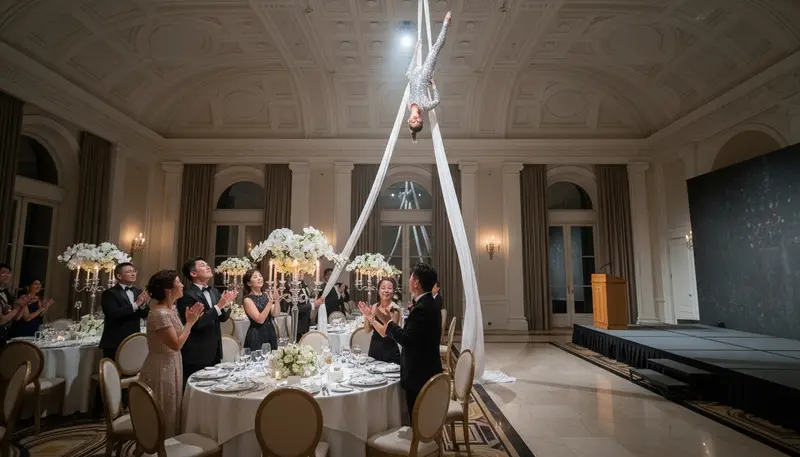
A wedding banquet runs three to four hours from the doors opening to the last dance. The vows need quiet music, the cocktail hour needs something guests can walk up to, the march-in needs a band on cue, and eight or ten courses need sets that rise and fall. We plan the day as one programme, book the acts and give them all the same run sheet, so nobody calls the couple on the day.
How to book wedding entertainment in 5 steps
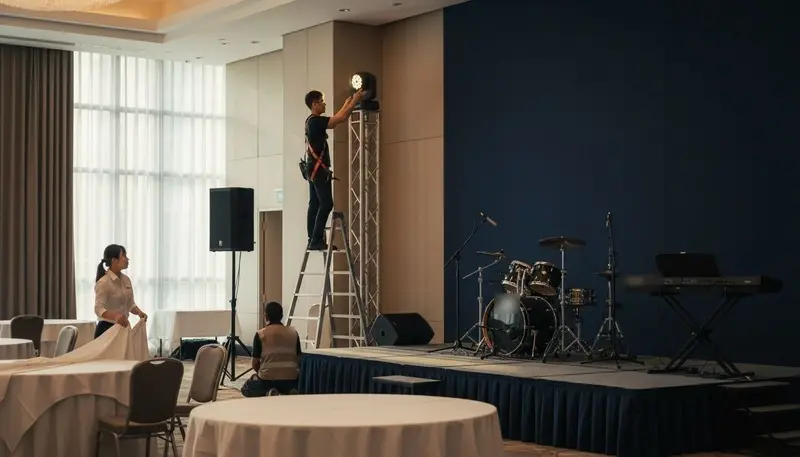
- Lock the date and the venue. The venue decides what is possible: stage size, power points, the sound curfew and whether a live band is allowed at all. Ask the banquet manager for these before you look at acts.
- Pick the moments that need an act. Solemnisation, cocktail hour, march-in, dinner sets, yum seng, first dance and after party. Most couples need two or three acts, not seven.
- Ask for quotes with the same brief. Send each supplier the date, venue, guest count, style of wedding and the moments you want covered. Then you can compare like with like.
- Compare on scope, not the total. Check the number of sets and their length, a bilingual emcee or not, whose sound system is used, overtime rates and what happens if a performer falls ill.
- Pay the deposit and send the run sheet. A deposit of 30 to 50 percent holds the date. Every act gets the run sheet two to four weeks before, with your march-in songs and first dance track.
When to book wedding entertainment
| Wedding date | Book this far ahead | Why |
|---|---|---|
| September to December | 9 months | Peak wedding season, the best bands go first |
| Auspicious dates and Saturdays | 9 to 12 months | Many couples pick the same few dates |
| Other weekends | 4 to 6 months | Good choice of acts at normal rates |
| Weekday or small dinner | 2 to 3 months | Easier dates, smaller line-ups |
Hotels also ask for the run sheet and a sound check slot, usually a short line check about an hour before the doors open.
What wedding entertainment costs
| Setup | Usual total (SGD) | What you get |
|---|---|---|
| Lean | 1,500 to 3,500 | A DJ for the whole event plus an emcee, or a solo musician for the vows and a DJ for dinner |
| Standard ballroom, 200 to 300 guests | 4,000 to 9,000 | A 4 to 6 piece band for dinner and the after party, a duo or trio for the cocktail hour, an emcee |
| Full production | from 10,000 | Band, string quartet for the vows, a cocktail hour act, a lion dance opener, AV upgrade |
These are typical ranges, before GST and travel surcharges. The final price depends on the date, the length of each set, the number of performers and your brief. Saturdays in November and December cost the most.
What changes the price
- The date. Friday and Saturday nights cost more. November to January and the Chinese New Year weeks usually run 15 to 25 percent higher.
- The length of each set. Most acts are priced for about two hours. Overtime past three hours is about SGD 200 to 500 per extra hour per act, so check the hotel's finishing time before you book.
- Band size. A 6 piece band costs more than a duo with a DJ, and needs more stage and power.
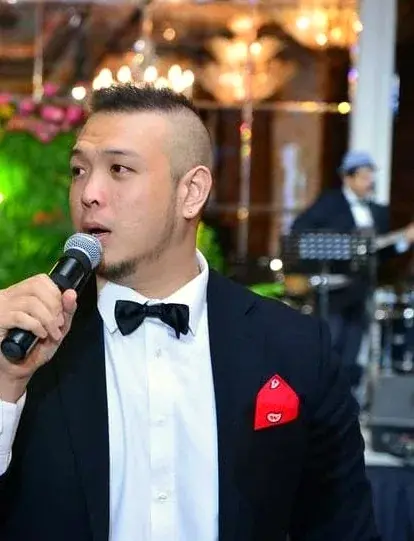
- Bilingual emcee. An emcee who hosts in English and Mandarin, Malay or Tamil sits at the top of the range.
- The venue. A garden, a beach club or an upper floor without a freight lift can add SGD 200 to 500 for transport and setup.
- Booking late. Last minute bookings usually carry a 10 to 30 percent surcharge, and the best bands for September to December dates go first.
A sample wedding evening
A typical 7pm ballroom dinner, and who plays when. Your hotel's banquet manager will adjust the times, but the order rarely changes:
| Time | Moment | Entertainment |
|---|---|---|
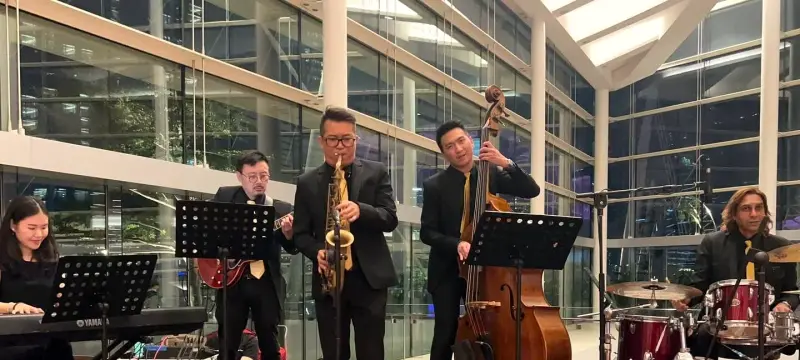
| 6.30pm | Guests arrive, cocktail reception | Jazz trio, roving magician or caricaturist |
| 7.30pm | Doors open, guests seated | Band or DJ, soft background set |
| 7.45pm | First march-in | Band or DJ on the emcee's cue |
| 8.00pm | Dinner starts | Band sets between courses |
| 8.45pm | Second march-in, yum seng toast | Band, emcee leads the toast |
| 9.30pm | Speeches, video montage | Music off, emcee hosts |
| 10.00pm | First dance, dance floor opens | Live vocalist, then band or DJ |
| 10.45pm | Last song, send-off | Band or DJ |
Wedding entertainment checklist
- Date and venue confirmed, and the venue's rules on amplified sound and finishing time
- Which moments need an act: vows, cocktail hour, march-in, dinner, after party
- Your first dance song and march-in songs, sent to the band early
- A bilingual emcee if your guests speak more than one language
- Who brings the sound system, and where the power points are
- The run sheet, sent to every act two to four weeks before
- A contact on the day who is not the couple
Wedding entertainment ideas, moment by moment
Solemnisation and arrival. A string duo, a string quartet, a harpist or a solo pianist for the 15 to 30 minutes guests wait and watch the vows, quiet enough for the celebrant's microphone.
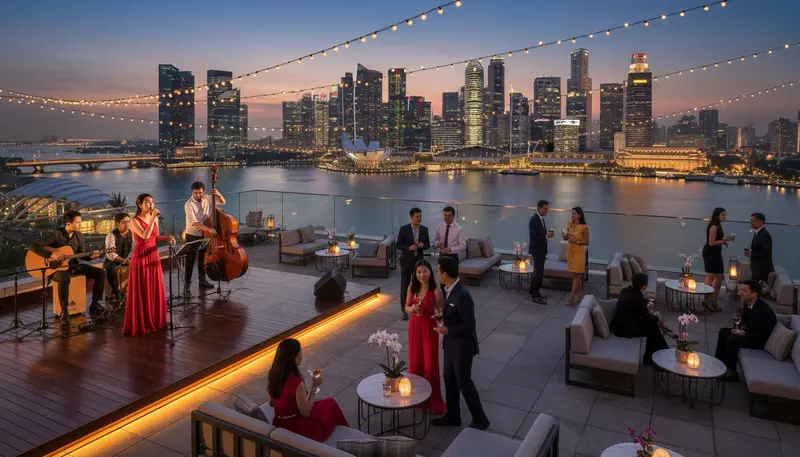
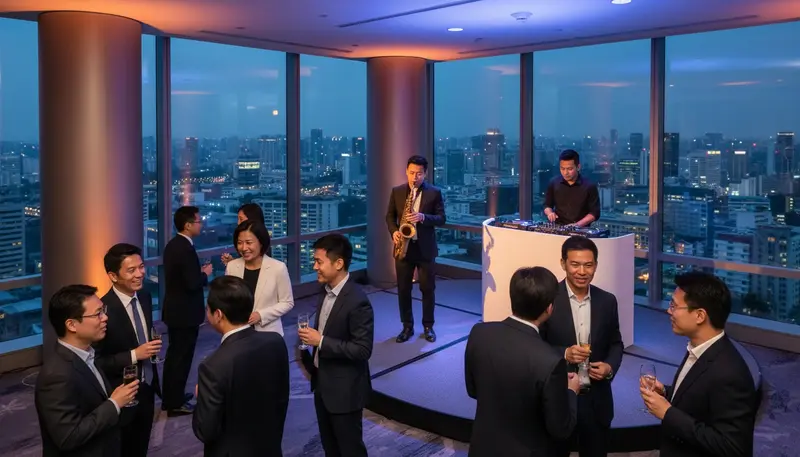
Cocktail hour. Guests are standing and taking photos, so book something they can walk up to: a roving magician, a caricaturist, a photo booth or a jazz trio. A stage act at this point plays to a room that is not looking.
March-in and first dance. A live band or a DJ with a clear cue from the emcee. Many couples have a live vocalist for the first dance even when a DJ runs the rest of the night, because it looks and records better.
Yum seng and dinner. At a Chinese banquet the band or DJ has to know the yum seng toast cues and time them against the courses. Between courses, the sets alternate upbeat and mellow so the energy holds.
After party. If guests stay late, a DJ takes over from the band for open dancing.
By style of wedding
- Chinese banquet. A lion dance troupe to open the reception, a band that knows the yum seng cues and a bilingual emcee.
- Malay wedding. A kompang ensemble for the bersanding procession, then a DJ or live vocalist for the reception.
- Indian wedding with a sangeet. A bhangra or Bollywood troupe and a DJ who can mix Tamil, Hindi and Punjabi tracks, plus a band or singer for the reception.
- Garden or rooftop solemnisation. An acoustic duo or a harpist with a small PA, and a check on the venue's curfew for amplified sound.
- Intimate dinner under 60 guests. A solo pianist or acoustic duo for the whole evening and a close-up magician between courses.
Fewer acts, more time for each
For most budgets, three bookings are enough: a band or a DJ as the anchor, an emcee for the march-ins and the yum seng, and one act that suits your background or your venue. With four or more acts, each one gets a shorter slot and the changeovers eat into dinner.
Agency or direct booking
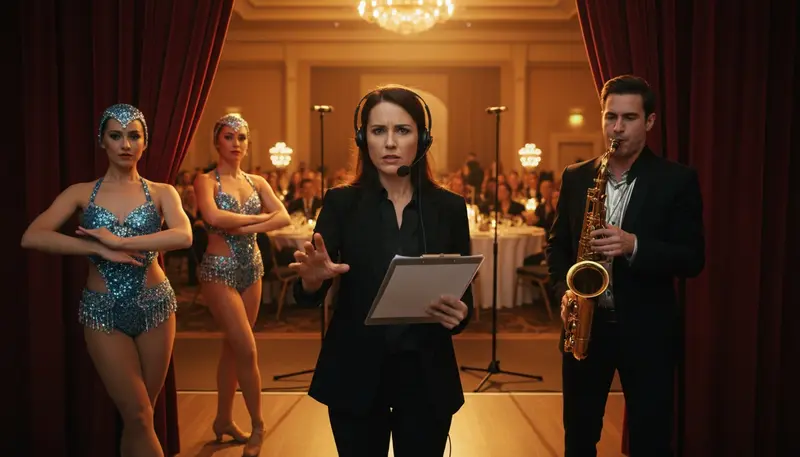
Book one act direct if you only need a DJ or a pianist. Once you need three or more acts, one team saves you work: one contract, one run sheet, one person cueing the band, the emcee and the lion dance, and a replacement if someone falls ill. Ask any agency whether it books the performers directly or through another agency, because a second layer usually adds cost.
Send the date, venue, guest count and style of wedding through the quote form. For a birthday or anniversary party, see private party entertainment, and for the full planning order see the event entertainment planning guide.