To plan event entertainment in Singapore, start with the running order, not the acts. Write down what each part of the evening is for, check what the venue allows, then choose one act for each part and one team to run them. This guide takes you through it in five steps, with the checks to make before you pay a deposit.
1. Write the running order first
List the parts of your event in order: arrival, opening, speeches, dinner, awards or lucky draw, the high point, dancing, close. Next to each, write what it needs to do. Arrival needs music people can talk over. Speeches need a strong emcee. Dinner needs background energy. The high point needs one act the room will remember. The end of the night needs a dance floor or a calm close.
Now give each part a length. A hotel dinner service often takes about 90 minutes. An awards segment of 20 minutes is common. Speeches always run long, so add 10 to 15 minutes of float. This is where most events go wrong: the hotel times the courses without knowing about the awards or a band changeover, and the dance floor opens when half the room is leaving.
2. Check the venue before the acts
Ask the venue for four things in writing:
- Sound curfew. Many hotel ballrooms cut sound around 11pm to 11.30pm.
- Power. An LED act or a band may need more than standard sockets.
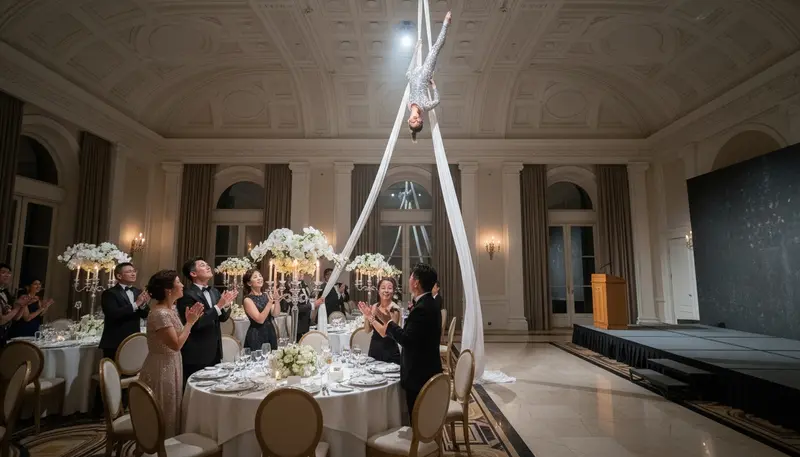
- Stage and ceiling. Aerial and acrobatic acts need height and approval, and a large troupe needs floor space.
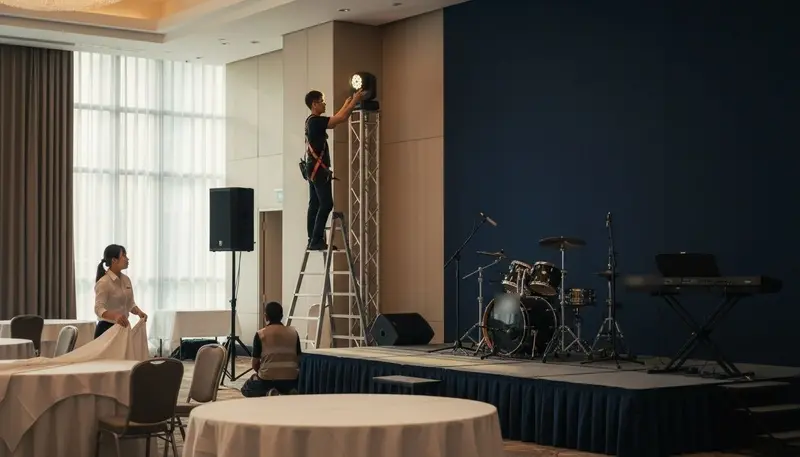
- Load in times. Some rooms are released only two to three hours before the doors open, while sound checks and stage setup usually take three to four hours.
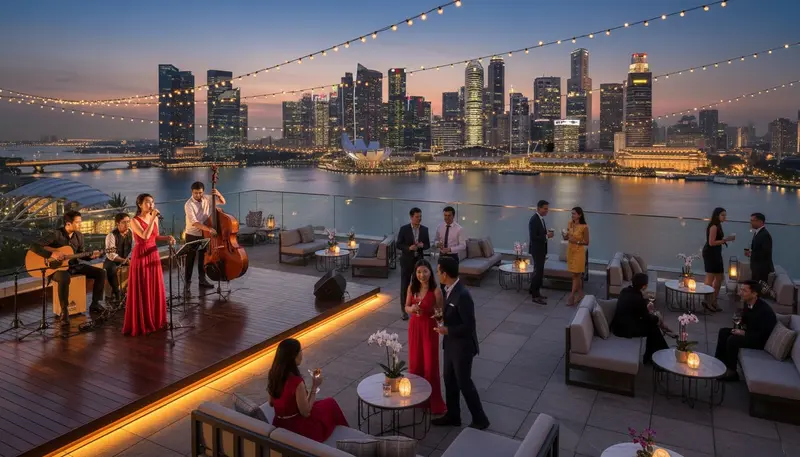
Outdoor venues and rooftops also need a rain plan. Fire acts need a permit.
3. Choose fewer, better acts
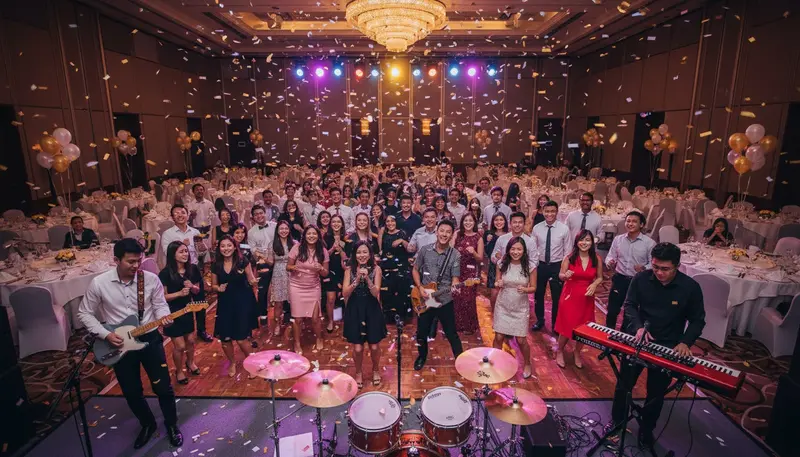
One excellent act in the right place leaves a bigger impression than several average ones squeezed into the evening. For most events, plan an emcee, one musical anchor (a live band or a DJ) and one or two feature acts. A live band gives more energy on the dance floor. A DJ is more flexible across age groups and costs less. Match each act to the room: an act that looks impressive in a large ballroom video can look cramped in a small function room.
4. Choose the team
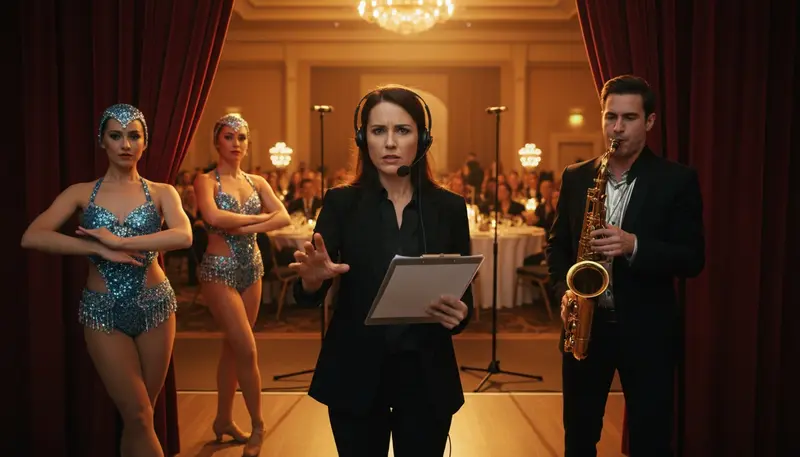
An agency is worth it once you need three or more acts, because one team handles the run sheet, the sound checks and a replacement if someone falls ill. Before you sign, check:
- A written quote, broken down. Talent fee, sound and lighting, transport, setup manpower and GST, not one package figure.
- Who actually performs. Ask for photos or videos of the performers assigned to your date, not a general showreel.
- Terms in writing. Cancellation, rescheduling and rain terms.
- Two quotes for the same brief. Comparing them shows what one quote left out, such as transport or overtime rates.
- Speed. A written quote should arrive within a working day of sending the date, the venue and the headcount.
A deposit of 30 to 50 percent to hold the date is normal. No fixed quote, no named performer until days before the event, or GST appearing only on the final invoice are warning signs.
5. Book in time
| Event | Book ahead |
|---|---|
| Standard weekday corporate event | 4 to 8 weeks |
| December and the month around Chinese New Year | 8 to 12 weeks |
| Company dinner and dance in November or December | 6 to 9 months |
| Wedding | 3 to 9 months |
| Office Christmas party | 8 to 12 weeks |
| Private party | 2 to 4 weeks |
Two to four weeks before the event, share the final run sheet with every act and the venue. In the last week, confirm load in times, the sound check slot and the contact person on the day.
Next steps
See event entertainment prices to set a budget, and the dinner and dance page or corporate event page for programme ideas. When you are ready, send your details through the quote form.